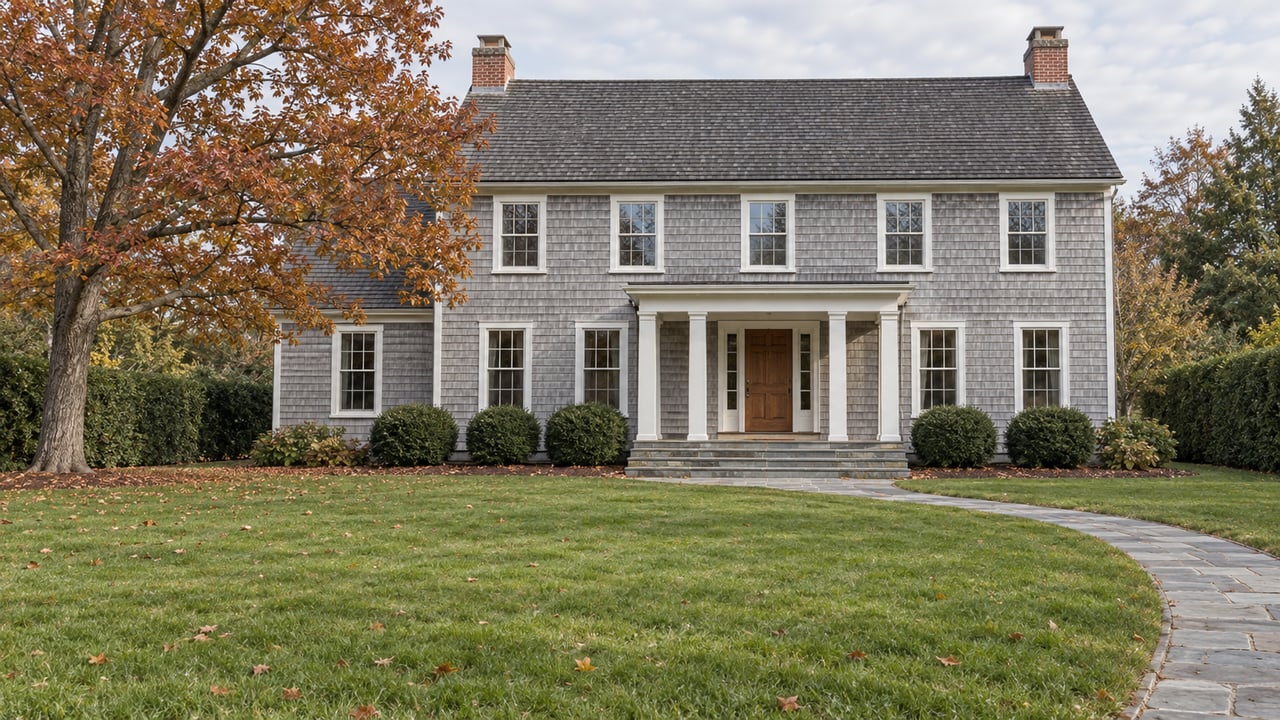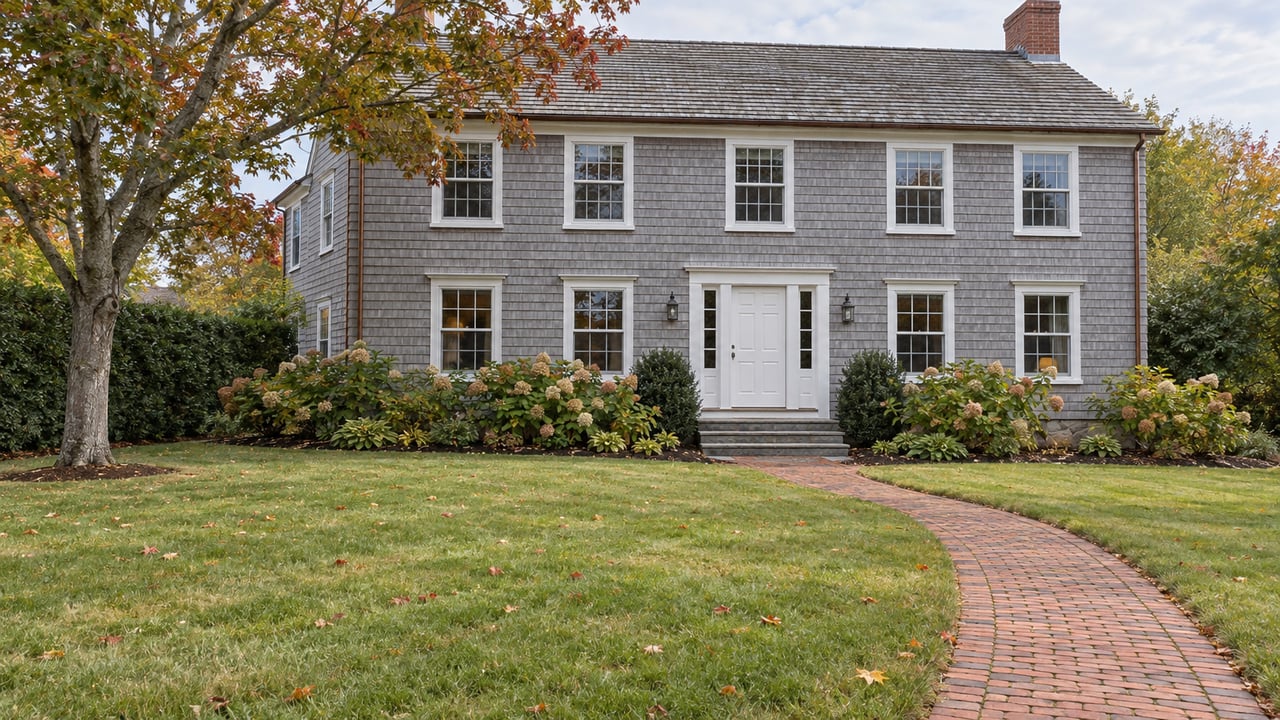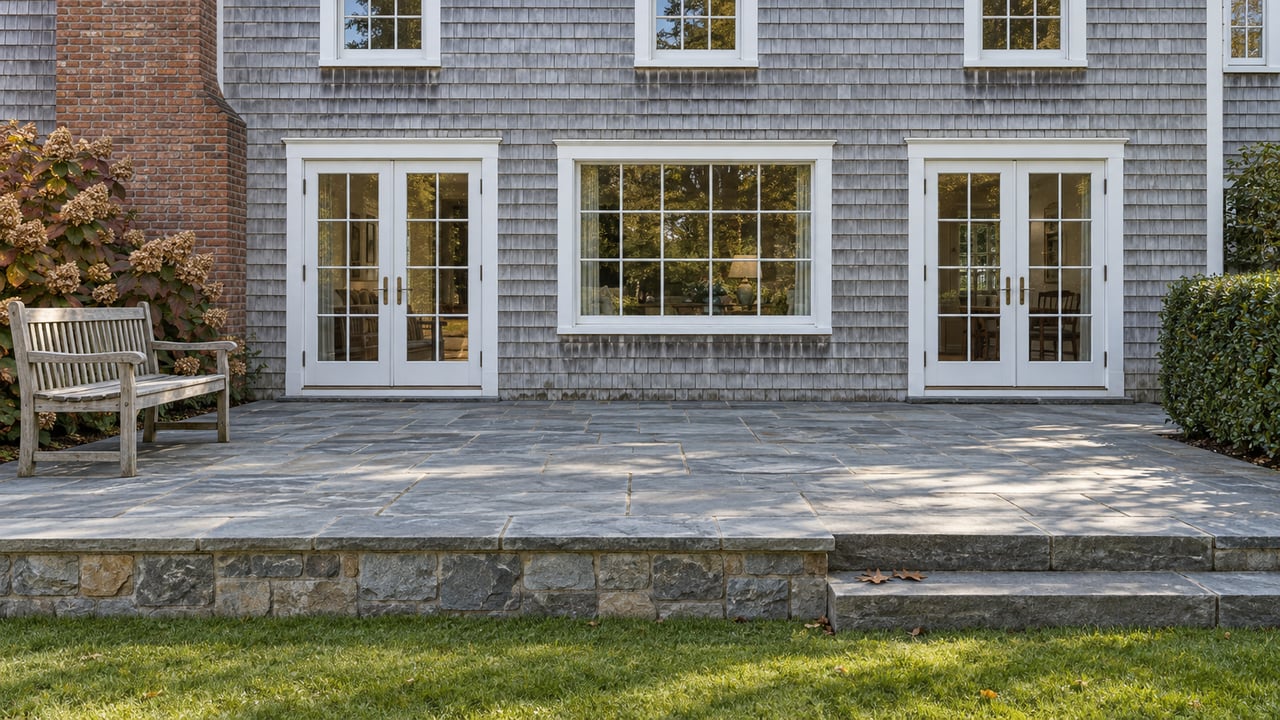
The number usually lands late in the process, buried in a closing statement the attorney slides across the table during the final walkthrough of paperwork. It is not the mansion tax, which most buyers have already heard about from a friend who bought in Manhattan. It is the Peconic Bay Community Preservation Fund tax, and in Southampton the Town Code sets out a detail that catches even seasoned buyers off guard: the exemption everyone mentions when they describe this tax does not shrink as the price goes up. It disappears.
That distinction matters more here than almost anywhere else the tax applies, because Southampton's luxury market rarely trades below the line where the exemption survives.
What the tax actually is, and what changed in 2023
The Town of Southampton's Fund Overview traces the Community Preservation Fund to 1998, when Governor George Pataki signed legislation letting five East End towns fund land and water protection through a transfer tax on real estate sales. Voters extended it twice, most recently in 2016, pushing the program through 2050. The Peconic Land Trust reports that in 2022, voters in Southampton and three neighboring towns approved an additional 0.5 percent Community Housing Fund tax on top of the original 2 percent CPF rate. Advantage Title's 2023 bulletin states that the combined rate, 2.5 percent, took effect for conveyances starting April 1, 2023, and it is what buyers pay today.
The tax is calculated after an exemption is subtracted from the purchase price. The Town of Southampton's CPF FAQ states that for an improved residential property in Southampton, the first $400,000 is exempt. For vacant, unimproved land, the first $100,000 is exempt. Those figures increased from their prior levels as part of the same 2023 change.
Here is the part that gets missed: both exemptions only apply when the total consideration is $2,000,000 or less. Cross that line and the exemption is not reduced. It is gone. The tax is calculated on the full purchase price, with nothing subtracted.
The line, in dollars
The cleanest way to see this is to compare two sales that differ by two dollars.
| Sale at $1,999,999 | Sale at $2,000,001 | |
|---|---|---|
| Exemption applies | Yes, $400,000 | No |
| Taxable amount | $1,599,999 | $2,000,001 |
| CPF plus Housing Fund tax (2.5%) | About $40,000 | About $50,000 |
A two dollar difference in sale price produces a $10,000.05 difference in tax: $10,000 from the lost exemption and five cents on the additional $2 in purchase price. For vacant land, the same mechanism costs a buyer exactly $2,500, since 2.5 percent of the $100,000 land exemption works out to that figure.
This is worth sitting with for a moment, because it means the cost of losing the exemption is fixed and predictable. It is not a sliding scale. Whether a Southampton buyer closes at $2.1 million or $12 million, the exemption they lost is worth the same $10,000 either way. What changes is simply whether they ever had it to lose.
Why this exemption rarely reaches the deals James actually closes
According to RealTrends' analysis of 2024 sales data, James closed $111.97 million across 22 transaction sides that year, an average of roughly $5 million per side. At that price point, the $400,000 exemption is not a discount buyers can plan around. It is a feature of the tax code that belongs to a different market segment entirely.
This is the detail worth understanding before an offer goes in, not after: for most Southampton estate, waterfront, and new construction purchases, the CPF exemption might as well not exist. The tax applies to the entire purchase price from the first dollar. Anyone comparing this transaction cost to what a friend paid on a smaller East End purchase, one that landed under $2 million and kept its exemption, is comparing two different tax structures, not two versions of the same discount.
What stacks on top of it
The CPF and Housing Fund tax do not arrive alone. The New York State Department of Taxation and Finance says New York's mansion tax applies at a flat 1 percent on residential purchases of $1 million or more anywhere in the state. Only within New York City's five boroughs does a tiered, escalating schedule apply on top of that base rate. Outside the city, including all of Southampton, the rate stays flat at 1 percent no matter how high the price climbs. A $20 million purchase and a $2 million purchase both pay the same 1 percent mansion tax rate; only the CPF and Housing Fund exemption behaves differently by price tier.
New York's separate state real property transfer tax, typically 0.4 percent of the sale price, is a smaller line item by comparison, and it is generally the seller's statutory responsibility, though buyers and sellers can and do negotiate who actually writes that check.
Together, these three taxes amount to roughly 3.9 percent of the purchase price for a Southampton transaction above the $2 million mark before title insurance, attorney fees, mortgage recording, or survey costs enter the picture; that is the combined transaction total, not necessarily the buyer's bill.
Who pays, and where the negotiation actually lives
The Town of Southampton is clear that the CPF and Housing Fund tax is a closing cost paid by the buyer, referred to in the statute as the grantee. It is collected by the title closer at closing and filed with the deed at the Suffolk County Clerk's Office. The Suffolk County Clerk lists its office in Riverhead. That is the default and the statutory expectation.
That is the kind of detail a buyer's attorney should raise during attorney review rather than discovering at the closing table.
The same line applies to land and spec deals
For buyers and developers working the acquisition side of Southampton's market, the $2 million threshold applies just as strictly to vacant land as it does to finished homes. A teardown lot or a raw parcel destined for new construction loses its $100,000 exemption the same way an improved property loses its $400,000 exemption, the instant the price clears $2 million. Given how much of Southampton's land inventory now trades above that number, particularly parcels suited to the kind of spec construction that brings more than ten new homes to market here each year, this is a cost worth modeling before an offer goes in, not after a contract is signed.
A few direct questions
Does the exemption ever apply to a typical Southampton purchase? Only when the total price is $2 million or less. Above that, the tax applies to the full purchase price with no exemption subtracted, regardless of property type.
Is the CPF tax the same as the mansion tax? No. They are separate taxes that both apply to the same transaction. The mansion tax is a flat 1 percent state tax on purchases of $1 million or more. The CPF and Housing Fund tax is a local East End tax, 2.5 percent in Southampton, calculated after the exemption rules described above.
Southampton's tax structure rewards buyers who understand it before they are sitting across from a closing statement they did not expect. Knowing where the exemption actually applies, and where it quietly stops applying, is part of pricing a deal correctly from the first offer.
If you are weighing a purchase in Southampton and want the real numbers before you write an offer, not after, James Giugliano can walk you through exactly what a specific property will cost to close. Let's Connect.
This article is general information, not legal, tax or financial advice. Consult a qualified professional about your situation.