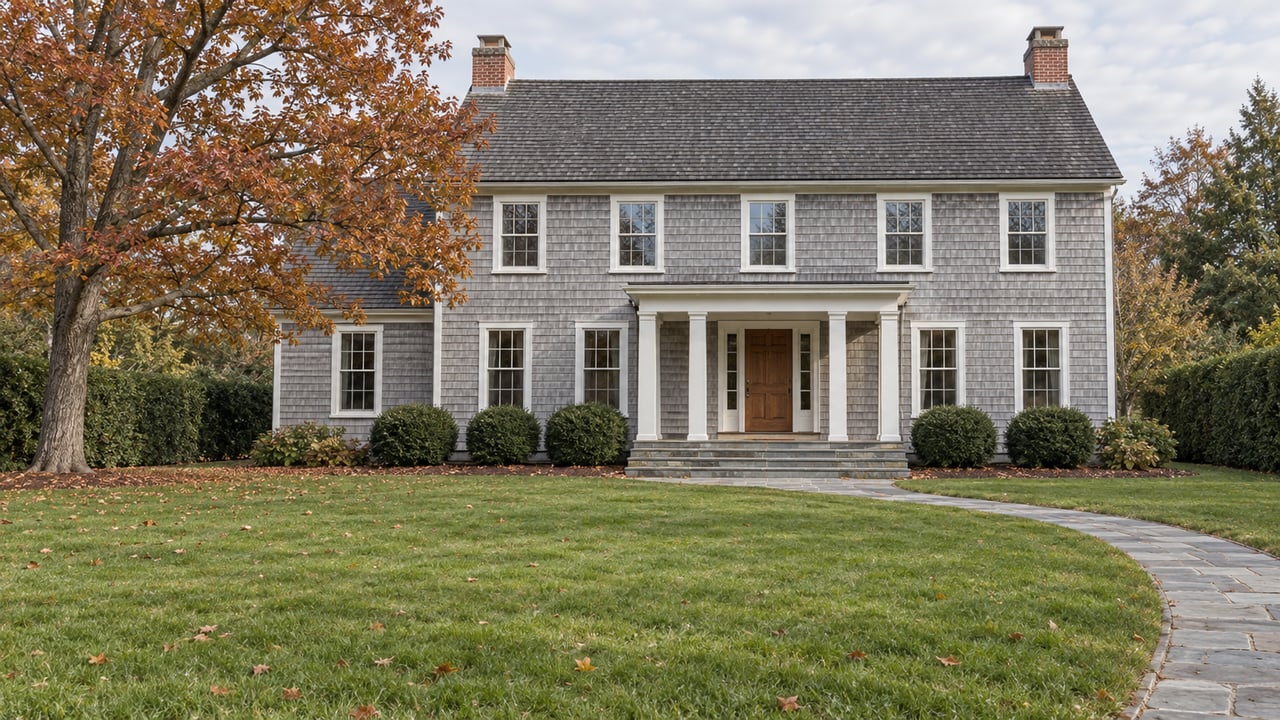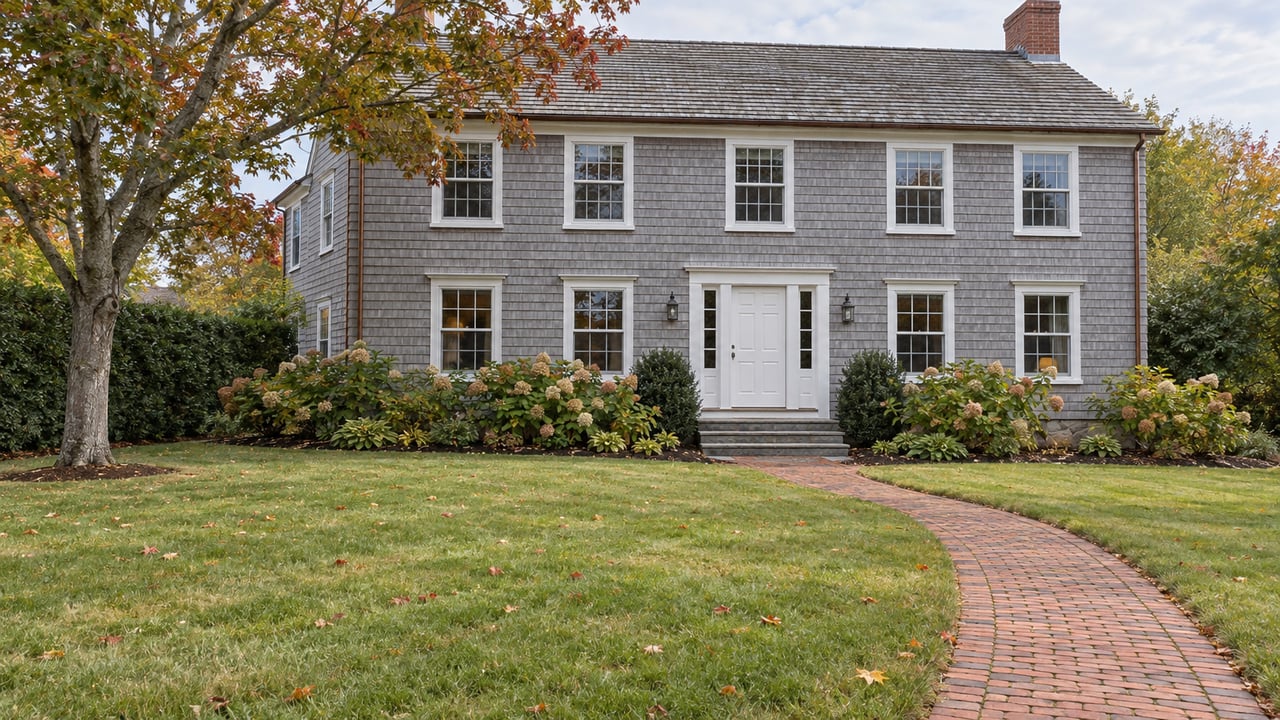
The zoning map doesn't decide what a downtown Southampton Village building can become. The septic system on its lot does. Suffolk County's health rules give each commercial parcel a fixed number of gallons per day based on its land area. On Main Street's small lots, that allowance runs out long before a restaurant, a medical practice or a rentable second-floor apartment would fit. The village's answer is a proposed sewer district for roughly 254 parcels in the central business district. Its draft environmental review scope goes to a public hearing on October 8, 2026, with written comments accepted through October 22.
For anyone pricing a village-center building, this matters more than almost anything on the zoning map. The building's value depends on two things: what it can be used for now, and what it could be used for if the sewer gets built.
The Number Behind Every Change of Use
Under Article 6 of the Suffolk County Sanitary Code, the Department of Health Services works out a commercial lot's "population density equivalent" by multiplying its adjusted lot area in acres by 600 gallons per day. The rate drops to 300 gallons per day per acre in Groundwater Management Zones III, V or VI, or where community water isn't provided. Every use in the building then gets added up as a "density load," and the total has to fit inside that allowance.
The county's Standards for Approval of Plans and Construction for Sewage Disposal Systems for Other Than Single-Family Residences list the rates. The gaps between uses explain the whole downtown problem.
| Use | Density load | Total hydraulic load |
|---|---|---|
| Dry retail store | 0.03 gpd per sq ft | 0.03 gpd per sq ft |
| Salon or other wet store without food | 0.03 gpd per sq ft | 0.1 gpd per sq ft |
| Non-medical office | 0.06 gpd per sq ft | 0.06 gpd per sq ft |
| Medical office | 0.10 gpd per sq ft | 0.10 gpd per sq ft |
| Full-service restaurant | 10 gpd per seat | 30 gpd per seat |
| Outdoor patio dining | 5 gpd per seat | 15 gpd per seat |
| Housing unit, 601 to 1,200 sq ft | 225 gpd per unit | 225 gpd per unit |
Here is how that works out for a single storefront. Take 2,000 square feet of dry retail. It carries a density load of 60 gallons per day. Make the same space a 20-seat full-service restaurant and the density load becomes 200 gallons per day, before the county counts the 400 gallons of kitchen and gray water that also go into sizing the system. Put a mid-sized apartment upstairs and the building gains another 225 gallons. Meanwhile, a tenth-acre lot earns a density equivalent of 60 gallons per day at the 600-gallon rate and 30 at the 300-gallon rate. The figures are illustrative. Which rate applies depends on the parcel's groundwater zone and water service, and that gets confirmed for each property.
The pattern holds either way. The allowance comes from the land, and the land on Main Street doesn't get bigger.
Where That Leaves Main Street Today
In its February 2026 report on the plan, The Southampton Press described medical offices and restaurants as two "wet uses" currently barred by the Suffolk County Board of Health without a sewer system. It also said second-story apartments on Main Street have been barred from use as apartments. Mayor Bill Manger told Newsday in May 2026 that second-story apartments above many businesses cannot be rented because they are not connected to sewers.
For anyone underwriting a downtown building, those reports point to some practical conclusions.
- A retail tenant's lease rate reflects the uses allowed today. A future restaurant rent doesn't count until the flow capacity exists.
- Upstairs square footage that looks like an apartment may not legally work as one under current septic conditions.
- Expansion plans run into the same wall. The village's draft scope lists the kinds of redevelopment it is studying, including minor square footage expansions, possible second stories, and changes to higher-septic uses like restaurants, apartments and medical buildings.
So the zoning may allow a use the sanitary code won't support. In the village center, the second limit is the one that controls.
The Plan That Would Lift the Limit
The current proposal was announced in February 2026, after years of searching for a site. A 2023 effort to buy land at 1 Bowers Lane, north of County Road 39 and outside the village, was tabled after strong opposition from nearby residents. This time the village's task force limited its search to land inside village boundaries.
The plan has three moving parts, and they depend on each other.
- The plant. A treatment facility on village property behind the ambulance barn on Windmill Lane, using a sequencing batch reactor biological system followed by filtration. It would take flow pumped in from the central business district.
- The leaching fields. Treated water would go into the ground at Lola Prentice Memorial Park, the current dog park.
- The swap. In late May 2026, Southampton Town approved $3.4 million from the Community Preservation Fund to buy 135 Windmill Lane, the former home of The Express News Group. The building and parking lot would be demolished and the site would become the new dog park. If the sewer plan falls through, the property becomes additional green space for the village.
As of May 2026, Manger estimated the plant's cost at $60 million to $65 million and said officials hope to use town, county and state grants to help pay for it. He also said the hope is for the plant to open by 2030.
Three Things Still Have to Happen
The October hearing is one step in a longer process, and each remaining step could change the timeline.
The environmental review. The draft scope for the Generic Environmental Impact Statement covers the redevelopment build-out scenario, groundwater, surface water, historic and archaeological resources, community character, growth-inducing impacts and alternatives. Those alternatives include taking no action, which state law requires the review to consider. Trustee Rob Coburn estimated the review could take six to 12 months.
The lawsuit. Five residents who live near the park sued on March 27, 2026, to block its conversion to leaching fields. They cited a 2019 ruling that the land, which the Southampton school district gave the village in 1962, may be used only for recreational and educational purposes. A separate petition asks the court to hold the village in contempt of that ruling. A public docket summary refreshed October 2, 2026, shows the court declining to sign a proposed order to show cause in April, and no decision on the merits or settlement after that.
Albany. Using parkland for something else requires approval from the New York State Legislature. Bills sponsored by Assemblyman Tommy John Schiavoni and Senator Anthony Palumbo didn't make it out of committee before the session ended June 4. Schiavoni said in June that the state wants the lawsuit settled before moving forward.
So the sequence runs court, then legislature, then construction. Until the first two are resolved, the 2030 target is a goal, not a schedule.
A Village Down the Road Already Made This Trade
Westhampton Beach shows what downtown sewering looks like in practice. Southampton Town's 2026 Water Quality Improvement Project Plan update says that village used Community Preservation Fund money to connect Main Street businesses to the treatment facility at Gabreski Airport. The plan says this cut wastewater nitrogen from 40 to 60 milligrams per liter down to under 10.
There is also funding at the county level. The same plan describes Suffolk County's Water Quality Restoration Act, a one-eighth-percent sales tax increase expected to raise nearly $50 million a year starting in March 2025 for wastewater infrastructure countywide. The research found no award from that fund to Southampton Village's project, so it shows that money exists but not that this project will get it.
The village has framed the sewer as a water-quality project as much as a development one. Manger has pointed to septic systems polluting groundwater and bodies of water like Lake Agawam. Newsday reported that a Stony Brook University water quality report found toxic blue-green algal blooms in and around the village, including Lake Agawam, the 65-acre lake at its center.
What This Means When Pricing a Village-Center Building
A commercial building in Southampton Village's central business district has two values right now. One is its value under current septic limits, where the sanitary allowance, not the zoning, sets the realistic tenant mix. The other is its value if it's connected to a sewer, when restaurant, medical and upstairs residential uses become possible. The gap between the two depends on how a buyer or seller judges the lawsuit, the legislature, a 6-to-12-month environmental review and a 2030 target.
Comparable sales reflect that judgment too. A downtown building that sold with a restaurant already in place is a different asset from a dry-retail building next door, even with similar square footage. The restaurant may predate today's standards or sit on a lot with a different allowance. A careful comparison starts with the health department approvals in each file, not the listing description.
Questions Buyers and Owners Ask
Does the sewer plan affect homes outside the business district? The draft scope describes a system that mainly serves the central business district, about 254 parcels. Homes near Windmill Lane are closest to the planned plant and leaching fields, and the review will look at noise, odor, light and community character.
Can the public still weigh in? The draft scope lists a public comment period from September 10 through October 22, 2026, in addition to the October 8 hearing.
What happens to 135 Windmill Lane if the plan fails? According to The Southampton Press, the town-purchased property would become additional green space for the village.
If you own or are considering a building in the village center and want to know how its current use, its comparable sales and the sewer timeline fit together, James Giugliano can walk through the specifics of that property with you. Let's Connect.
This article is general information, not legal, tax or financial advice. Consult a qualified professional about your situation.